PV Plush Fabric Color Fastness And Shrinkage Rate Information For Garment Makers
Meta Description
Learn detailed
PV Plush Fabric color fastness and shrinkage rate standards, test data, and production tips for garment makers. Ensure stable garment sizing, color consistency, and qualified apparel quality.
Introduction
PV Plush Fabric is a mainstream 100% polyester knitted plush material widely adopted in modern garment manufacturing, including casual plush garments, children’s clothing, loungewear, robe apparel, and garment inner lining products. For professional garment makers, mastering accurate PV Plush Fabric color fastness and shrinkage rate data is the core foundation of standardized apparel production, directly determining garment sizing stability, color durability, finished product qualification rate, and user wearing experience. Unqualified PV Plush Fabric color fastness and unstable PV Plush Fabric shrinkage rate will lead to common production problems such as garment fading, color staining, size deformation, and batch inconsistency, causing mass product returns and production cost losses.
Most garment quality defects related to PV Plush Fabric apparel stem from insufficient understanding of professional PV Plush Fabric color fastness and shrinkage rate indicators. Many garment factories adopt universal fabric production parameters without targeted adjustment according to PV Plush Fabric’s unique textile characteristics, resulting in unqualified finished garments that fail international textile testing standards. This professional guide focuses entirely on garment production scenarios, systematically sorting out PV Plush Fabric color fastness grading standards, multi-scenario color stability performance, standardized PV Plush Fabric shrinkage rate data, influencing factors, and practical production adjustment solutions, providing accurate parameter references and operational guidelines for garment makers to achieve high-quality PV Plush Fabric apparel mass production.
Basic Textile Properties Of PV Plush Fabric Affecting Color Fastness And Shrinkage Rate
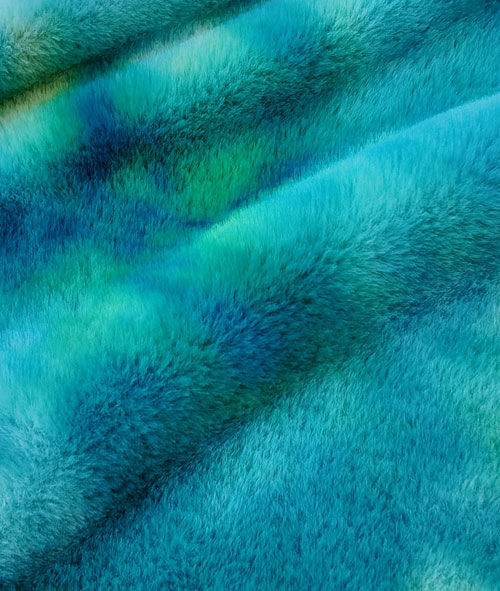
PV Plush Fabric is a fine knitted short-pile polyester fabric with compact fiber structure, soft surface texture, and excellent molding performance, which is why it is widely favored in plush garment design. The inherent fiber characteristics and weaving process of PV Plush Fabric fundamentally determine its unique color fastness and shrinkage rate performance different from cotton, ordinary knitted fabric, and other plush textile materials. Different from natural fiber fabrics, pure polyester PV Plush Fabric has low water absorption and stable molecular structure, resulting in low natural shrinkage rate, while professional dyeing and finishing processes directly define the color fastness level of PV Plush Fabric.
High-quality PV Plush Fabric for garment use adopts high-temperature reactive dyeing and fixed pile finishing technology, which locks dye molecules and fiber structure effectively, ensuring stable PV Plush Fabric color fastness and controlled PV Plush Fabric shrinkage rate within industrial qualified ranges. In contrast, low-grade untreated PV Plush Fabric has loose fiber fixation and incomplete dye penetration, leading to poor color fastness and excessive shrinkage deformation after washing and wearing. Garment makers must distinguish standard garment-grade PV Plush Fabric from ordinary decorative-grade PV Plush Fabric, as their color fastness and shrinkage rate parameters differ greatly and cannot be mixed in apparel production.
Complete PV Plush Fabric Color Fastness Standards For Garment Production
PV Plush Fabric color fastness refers to the ability of PV Plush Fabric to resist fading, color change, and dye staining under external conditions such as washing, friction, perspiration, light exposure, and dry cleaning, which is a mandatory testing indicator for exported and commercial garments. All color fastness tests of PV Plush Fabric adopt the international 1–5 grading standard, where grade 5 represents optimal color stability and grade 1 represents complete failure. Garment-grade PV Plush Fabric has clear qualified grading standards for different color fastness types, fully complying with ISO and AATCC textile testing specifications for apparel manufacturing.
PV Plush Fabric Washing Color Fastness is the most frequently tested indicator for daily wearable garments. Qualified PV Plush Fabric for garment production reaches grade 4 for color change and grade 3 for staining after standard washing tests. This means PV Plush Fabric will not produce obvious fading or bleed dye to other fabrics during conventional household washing cycles, avoiding cross-staining defects of matched garments. Dark-colored PV Plush Fabric maintains stable washing color fastness without color deviation after repeated cleaning, which is essential for improving the durability of plush garments.
PV Plush Fabric Rubbing Color Fastness includes dry rubbing and wet rubbing testing, simulating daily wearing friction and humid environment contact. Standard garment-grade PV Plush Fabric achieves grade 4 dry rubbing color fastness and grade 2–3 wet rubbing color fastness. Dry rubbing stability ensures PV Plush Fabric garments do not shed color and stain skin or other clothing during daily wearing, while wet rubbing performance guarantees color stability in sweat and humid scenarios, suitable for loungewear and close-fitting plush garments.
PV Plush Fabric Light Color Fastness controls garment fading caused by long-term light exposure. Qualified PV Plush Fabric reaches grade 3–4 light fastness, effectively resisting ultraviolet radiation damage and preventing gradual garment discoloration and aging during indoor placement and daily outdoor activities. This indicator is particularly critical for seasonal plush garments that require long-term display and wearing, ensuring consistent color tone throughout the product service cycle.
PV Plush Fabric Perspiration Color Fastness adapts to close-fitting garment wearing scenarios. Garment-grade PV Plush Fabric achieves grade 4 color change and grade 3 staining resistance under acid and alkaline perspiration tests, avoiding dye dissolution and skin staining caused by human sweat erosion. This standard makes PV Plush Fabric safe and reliable for children’s garments and close-fitting plush loungewear, meeting high-standard skin-friendly and color stability requirements.
PV Plush Fabric Dry Cleaning Color Fastness is suitable for high-grade plush garments that require dry cleaning maintenance. Qualified PV Plush Fabric reaches grade 4 color change and grade 3–4 staining fastness, ensuring no color fading or fabric damage during dry cleaning procedures and maintaining long-term garment appearance integrity.
Professional PV Plush Fabric Shrinkage Rate Data For Garment Makers
PV Plush Fabric shrinkage rate refers to the percentage of dimensional change in length and width after washing, drying, and environmental changes, which directly affects garment sizing accuracy and batch consistency. As a high-stability polyester knitted fabric, PV Plush Fabric has far lower shrinkage rate than natural fiber fabrics, with clear controllable parameter ranges for professional garment production. Formal garment-grade PV Plush Fabric strictly controls the overall shrinkage rate within 3%, which is the industry recognized qualified standard for plush apparel manufacturing.
In actual production testing, standard pre-shrunk PV Plush Fabric for garments has a washing shrinkage rate of 1% to 2% in both warp and weft directions, with minimal dimensional difference and stable structural performance. Unprocessed raw PV Plush Fabric without pre-shrunk finishing may have a maximum shrinkage rate of 3% to 4%, which exceeds the safe range for garment making and easily causes garment shrinkage, size narrowing, and fitting failure after washing. Garment makers must prioritize pre-shrunk PV Plush Fabric to ensure finished garment size stability and avoid post-production deformation risks.
PV Plush Fabric shrinkage rate presents consistent performance after multiple washing cycles. High-quality garment-grade PV Plush Fabric completes most dimensional changes in the first standard washing cycle, with almost no secondary shrinkage in subsequent repeated cleaning. This one-time stable shrinkage feature allows garment makers to accurately reserve shrinkage allowances in the pattern cutting stage, completely solving the problem of garment size deviation after long-term use and cleaning.
Key Factors Affecting PV Plush Fabric Color Fastness And Shrinkage Rate
Garment makers need to clarify the influencing factors of PV Plush Fabric color fastness and shrinkage rate to realize targeted quality control. The first core factor is fabric finishing technology. PV Plush Fabric with professional high-temperature setting and pre-shrunk treatment has tighter fiber structure and more stable dye molecular fixation, significantly improving PV Plush Fabric color fastness and reducing PV Plush Fabric shrinkage rate. In contrast, simple processed PV Plush Fabric without setting treatment has loose fibers and poor dye adhesion, leading to insufficient color fastness and excessive shrinkage.
The second factor is dye quality and dyeing process. High-grade environmental protection reactive dyes enable PV Plush Fabric to achieve high-level color fastness, while low-cost inferior dyes have poor penetration and adhesion, resulting in easy fading and color bleeding. Uniform low-temperature constant-pressure dyeing technology ensures consistent color fastness of PV Plush Fabric in batches, avoiding local color difference and unstable color fixation.
The third factor is fabric thickness and GSM density. High-density PV Plush Fabric with higher GSM has tighter fiber arrangement, lower water absorption, and more stable structure, with better color fastness and lower shrinkage rate than thin low-density PV Plush Fabric. Garment makers producing high-quality plush garments should select high-density standardized PV Plush Fabric to balance texture and dimensional stability.
Production Adjustment Skills Based On PV Plush Fabric Color Fastness And Shrinkage Rate
To ensure qualified finished PV Plush Fabric garments, garment makers need to formulate targeted production processes according to PV Plush Fabric color fastness and shrinkage rate characteristics. In the pattern design and cutting stage, reserve a 2% to 3% shrinkage allowance according to the actual shrinkage rate of bulk PV Plush Fabric, adapting to the slight dimensional change after fabric washing and ensuring the final garment size meets standard specifications.
In the garment washing and finishing stage, adopt low-temperature mild washing procedures for PV Plush Fabric garments to protect color fastness. Avoid high-temperature water washing and strong alkaline detergents, which will destroy the dye structure of PV Plush Fabric, cause fading, and accelerate fiber shrinkage deformation. For color-matched PV Plush Fabric garments with multiple tones, test color staining performance in advance according to PV Plush Fabric color fastness data to prevent cross-color defects during processing and wearing.
In bulk quality inspection, take PV Plush Fabric color fastness and shrinkage rate as key sampling indicators. Conduct standard washing shrinkage tests and color fastness friction tests on each batch of PV Plush Fabric to verify whether the parameters meet garment production standards. Eliminate unqualified PV Plush Fabric batches with excessive shrinkage and insufficient color fastness to ensure batch stability of finished garments.
Common Production Risks Caused By Unqualified PV Plush Fabric Color Fastness And Shrinkage Rate
Ignoring PV Plush Fabric color fastness and shrinkage rate standards will bring multiple quality risks to garment production. Insufficient PV Plush Fabric color fastness will cause garment fading after washing and wearing, stain light-colored matching fabrics and user skin, and seriously affect product appearance and user experience. Long-term light exposure fading will lead to inconsistent front and back garment color, reducing product market competitiveness and triggering after-sales complaints and returns.
Excessive PV Plush Fabric shrinkage rate will lead to overall garment shrinkage, tight fitting, deformed stitching, and unqualified size after washing, making finished garments unable to meet wearing standards. Unstable batch shrinkage rate will cause size deviation between different garment batches, disrupting brand size grading standards and affecting long-term product sales and brand reputation. These quality risks can be completely avoided by strictly screening PV Plush Fabric parameters and standardizing production processes.
Quality Control Standards For Garment-Grade PV Plush Fabric
Combined with international apparel textile specifications, the unified qualified standard for garment-grade PV Plush Fabric is summarized as follows: PV Plush Fabric washing color fastness ≥ grade 3–4, rubbing color fastness ≥ grade 3, light and perspiration color fastness ≥ grade 3, and overall shrinkage rate controlled within 3%. Garment makers should take these indicators as the threshold for bulk procurement and incoming inspection of PV Plush Fabric, refusing any fabric that fails the standard.
In addition, for high-end children’s garments and close-fitting plush apparel, higher PV Plush Fabric color fastness requirements can be implemented, with all color fastness indicators reaching grade 4 or above and shrinkage rate controlled within 2%, ensuring ultra-high product safety and stability. Establishing complete PV Plush Fabric parameter filing and batch testing mechanisms is the key to standardized garment factory quality management.
Conclusion
PV Plush Fabric color fastness and shrinkage rate are two core technical indicators that determine the quality and practicability of PV Plush Fabric garments. Standard garment-grade PV Plush Fabric has stable multi-scenario color fastness performance and low controllable shrinkage rate, which fully meets the production requirements of modern plush loungewear, children’s clothing, and decorative garments. Garment makers must fully master the professional grading standards, data ranges, and influencing factors of PV Plush Fabric color fastness and shrinkage rate, combine targeted pattern allowance reservation, standardized processing technology, and strict batch inspection mechanisms to avoid production quality risks.
Accurate control of PV Plush Fabric color fastness and shrinkage rate not only improves the qualification rate and batch consistency of finished garments but also optimizes product wearing durability and user satisfaction, helping garment factories produce high-quality, compliant, and market-competitive PV Plush Fabric apparel products and stabilize long-term market supply advantages.

 Pусский
 日本語
日本語 한국어
한국어 العربية



 WhatsApp
 Phone
Phone
Comment
(0)