Meta Description
Explore professional PV Plush, Mink Plush, and Velvet Fabric weight selection rules for manufacturers. Learn standard fabric weight parameters, scenario matching, and quality control to optimize bulk production and finished product performance.
Introduction
Fabric weight is one of the most critical technical parameters that determines the overall performance, tactile texture, structural durability, and final application effect of PV Plush, Mink Plush, and Velvet Fabric in industrial manufacturing. For textile manufacturers, accurate
PV Plush Fabric,
Mink Plush Fabric, and Velvet Fabric weight selection directly affects product quality consistency, production yield, cost control, and downstream customer satisfaction. Many manufacturing quality problems such as insufficient fluffiness, poor compression resistance, excessive fabric thinness, abnormal product thickness, and unstable shaping are caused by mismatched PV Plush Fabric, Mink Plush Fabric, and Velvet Fabric weight during raw material procurement and production design.
PV Plush Fabric, Mink Plush Fabric, and Velvet Fabric are three mainstream plush and velvet textile materials widely used in plush toys, home textiles, warm bedding, decorative upholstery, and apparel accessories. Although these three fabrics all feature soft surface texture and excellent ornamental value, their standard fabric weight ranges, fiber density structures, pile height matching rules, and load-bearing performance are completely different. A unified and standardized fabric weight selection reference helps manufacturers avoid blind material selection, realize precise matching between fabric weight and product positioning, and maximize the cost-performance of PV Plush Fabric, Mink Plush Fabric, and Velvet Fabric in mass production. This comprehensive guide systematically sorts out the standard fabric weight parameters of PV Plush Fabric, Mink Plush Fabric, and Velvet Fabric, analyzes the impact of fabric weight on product performance, and provides targeted weight selection suggestions for different manufacturing scenarios.
Basic Understanding Of Fabric Weight For PV Plush, Mink Plush And Velvet Fabric
Fabric weight, usually measured in grams per square meter (GSM), refers to the total fiber weight per unit area of PV Plush Fabric, Mink Plush Fabric, and Velvet Fabric, which intuitively reflects the fiber density, pile thickness, and structural solidity of each fabric type. For plush and velvet textiles, fabric weight is positively correlated with pile density and fiber filling degree within a reasonable range. Higher fabric weight means denser fiber arrangement, thicker three-dimensional structure, better warmth retention and compression resistance, while lower fabric weight represents lighter texture, better air permeability, and softer draping performance.
For manufacturing production, PV Plush Fabric weight, Mink Plush Fabric weight, and Velvet Fabric weight are core indicators for quality inspection and batch standardization. Qualified industrial PV Plush Fabric has fixed weight fluctuation tolerance, and excessive weight deviation will lead to inconsistent hand feel, uneven product thickness, and unqualified finished product durability. Similarly, Mink Plush Fabric relies on accurate weight control to ensure layered fluffiness and simulated fur texture, while Velvet Fabric weight determines surface flatness, luster uniformity, and sewing stability. Mastering the basic weight characteristics of PV Plush Fabric, Mink Plush Fabric, and Velvet Fabric is the premise of scientific manufacturing selection.
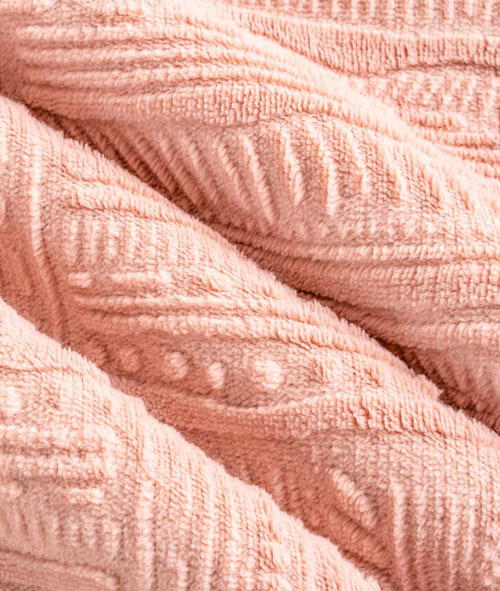
Standard Fabric Weight Range And Performance Characteristics By Fabric Type
Each of PV Plush Fabric, Mink Plush Fabric, and Velvet Fabric has exclusive industrial standard fabric weight ranges, corresponding to unique structural performance and manufacturing adaptability. Manufacturers need to clarify the weight grading and core advantages of different weight specifications to achieve targeted selection.
PV Plush Fabric Standard Weight Classification: PV Plush Fabric is a practical short-pile plush material with stable and standardized weight parameters suitable for mass durable product manufacturing. Conventional industrial PV Plush Fabric weight ranges from 280GSM to 380GSM, covering three mainstream grades: lightweight PV Plush Fabric at 280–300GSM, standard medium-weight PV Plush Fabric at 300–350GSM, and thickened high-density PV Plush Fabric at 350–380GSM. Lightweight PV Plush Fabric features thin and flexible texture, good air permeability, and low material cost, suitable for lightweight dispo
sable and frequently cleaned products. Medium-weight PV Plush Fabric is the most versatile specification, balancing softness, wear resistance, and shaping performance, which is the mainstream choice for most PV Plush Fabric toy and home textile products. Thickened PV Plush Fabric has ultra-high pile density, solid structure, and strong compression and friction resistance, effectively avoiding pile shedding and flattening, suitable for high-frequency use and long-service-life finished products. The weight stability of PV Plush Fabric is extremely high, with industrial batch weight fluctuation controlled within ±5GSM, ensuring consistent manufacturing quality.
Mink Plush Fabric Standard Weight Classification: Mink Plush Fabric is a high-end layered plush fabric with higher overall weight than PV Plush Fabric, with industrial standard weight ranging from 320GSM to 450GSM. Light-grade Mink Plush Fabric is 320–360GSM, featuring delicate ultra-fine piles, light and fluffy hand feel, and excellent skin friendliness, focusing on comfortable tactile experience. Medium-grade Mink Plush Fabric at 360–400GSM balances fluffiness and structural stability, with uniform layered texture and moderate warmth, suitable for most high-end daily warm products. Thickened luxury Mink Plush Fabric at 400–450GSM has ultra-dense multi-layer piles, superior air-locking warmth, and strong three-dimensional stereoscopic effect, presenting high-grade simulated fur texture. Different from PV Plush Fabric, Mink Plush Fabric weight is mainly determined by layered fiber quantity rather than single-layer density, so higher Mink Plush Fabric weight represents richer texture layering and higher ornamental value.
Velvet Fabric Standard Weight Classification: Velvet Fabric focuses on flat cut-pile structure and smooth luster, with relatively refined weight grading, ranging from 250GSM to 400GSM. Lightweight Velvet Fabric at 250–300GSM has thin and delicate texture, excellent draping, and soft surface, suitable for apparel sewing and decorative lightweight products. Standard Velvet Fabric at 300–350GSM maintains the best balance of flatness, luster, and structural stability, with neat pile arrangement and uniform light reflection, which is the core specification for household decoration and boutique craft products. Thickened Velvet Fabric at 350–400GSM has enhanced structural rigidity and pressure resistance, not easy to wrinkle or deform, suitable for upholstery and fixed decorative products that require long-term shaping. Velvet Fabric weight directly affects surface smoothness; too low Velvet Fabric weight will cause sparse piles and uneven surface, while excessive weight will reduce fabric flexibility and affect sewing ductility.
Key Factors For Manufacturers To Select PV Plush, Mink Plush, Velvet Fabric Weight
In actual manufacturing production, manufacturers cannot select PV Plush Fabric weight, Mink Plush Fabric weight, and Velvet Fabric weight solely based on numerical standards. It is necessary to comprehensively judge according to product positioning, usage scenarios, processing technology, and cost budget to avoid performance mismatch caused by blind weight selection.
First, match fabric weight according to finished product functional positioning. For daily durable products requiring wear resistance and long service life such as children’s plush toys, pet supplies, and frequently washed home textiles, manufacturers should prefer medium and thick specifications of PV Plush Fabric above 300GSM, which can ensure dense pile structure and reduce hair shedding and deformation risks. For high-end warm decorative products such as luxury blankets, gift textiles, and bedroom bedding, select medium and high-weight Mink Plush Fabric above 360GSM to ensure sufficient fluffiness and warmth layering. For apparel and flexible decorative crafts that focus on skin friendliness and draping, choose lightweight and standard Velvet Fabric below 350GSM to balance soft touch and sewing flexibility.
Second, coordinate fabric weight with processing technology requirements. Lightweight PV Plush Fabric, Mink Plush Fabric, and Velvet Fabric have better ductility and are suitable for complex cutting, three-dimensional sewing, and personalized printing processes, not easy to cause stitching distortion and fabric stiffening. Thickened high-weight fabrics have strong structural stability and are suitable for simple cutting, fixed shaping, and large-area upholstery production, effectively avoiding wrinkling and collapse during processing. Manufacturers need to adjust fabric weight specifications according to production process difficulty to improve finished product yield and processing efficiency.
Third, control fabric weight matching with cost and market positioning. Low-end mass civilian products prioritize cost performance, so manufacturers can select standard lightweight PV Plush Fabric and conventional Velvet Fabric with moderate weight to reduce raw material costs while meeting basic performance. Mid-to-high-end customized products focus on texture and quality, requiring high-weight Mink Plush Fabric and thickened Velvet Fabric to improve product grade and market competitiveness. Reasonable weight matching can avoid cost waste caused by excessive fabric performance and quality defects caused by insufficient weight.
Scenario-Based Fabric Weight Selection Guide For PV Plush, Mink Plush, Velvet Fabric
Combined with manufacturing production practice, the targeted weight selection standards of PV Plush Fabric, Mink Plush Fabric, and Velvet Fabric for mainstream product scenarios are summarized to provide accurate reference for manufacturers’ bulk procurement and production design.
Plush Toy Manufacturing Weight Selection: For ordinary cartoon dolls and daily plush toys, 300–350GSM standard PV Plush Fabric is the best choice, with stable texture, moderate softness, and strong wear resistance, suitable for mass production. For high-end gift toys and boutique simulation toys, 360–400GSM medium-weight Mink Plush Fabric is preferred to enhance fluffy texture and product grade. For toy local decoration and surface splicing, 280–300GSM lightweight Velvet Fabric can be matched to increase surface luster and layered aesthetics.
Home Textile Blanket And Pillow Production Weight Selection: For all-season daily blankets and household pillows, 320–350GSM medium-weight PV Plush Fabric balances warmth and air permeability, easy to clean and maintain. For winter thick warm blankets and high-end bedding, 400–450GSM thickened Mink Plush Fabric provides ultra-strong warmth and fluffy comfort. For decorative throw pillows and soft upholstery, 300–350GSM standard Velvet Fabric ensures smooth surface and elegant luster, improving indoor decoration grade.
Apparel And Warm Accessory Production Weight Selection: For casual plush lining, warm hats, and scarves, lightweight 280–300GSM PV Plush Fabric and 320–360GSM Mink Plush Fabric are selected to avoid bulky wearing while ensuring warmth. For velvet dresses, fashion coats, and close-fitting apparel, 250–300GSM lightweight Velvet Fabric is used to ensure flexible draping and comfortable fitting effect.
Decorative Craft And Upholstery Production Weight Selection: For large-area sofa upholstery and fixed decorative textiles, 350–400GSM thickened Velvet Fabric and PV Plush Fabric have strong pressure resistance and shaping ability, maintaining long-term flat and neat appearance. For personalized handmade crafts and gift box lining, medium-weight Mink Plush Fabric with uniform texture is matched to balance ornamental value and processing convenience.
Common Weight Selection Mistakes And Manufacturing Quality Control Tips
Many manufacturers face finished product quality problems due to incorrect fabric weight selection and insufficient batch weight control. The most common mistake is blindly pursuing low weight to reduce costs, resulting in sparse fabric piles, insufficient warmth, serious hair shedding, and poor durability. Another typical error is excessive weight selection, leading to stiff fabric hand feel, poor air permeability, increased raw material costs, and reduced product market competitiveness. In addition, ignoring batch weight consistency of PV Plush Fabric, Mink Plush Fabric, and Velvet Fabric will cause color difference, texture inconsistency, and unqualified unified specifications of bulk products.
For standardized manufacturing quality control, manufacturers need to establish strict fabric weight sampling inspection standards. Randomly sample PV Plush Fabric, Mink Plush Fabric, and Velvet Fabric from different batches and positions to detect actual GSM values, ensuring weight fluctuation is controlled within the industrial qualified range. At the same time, combine fabric weight with pile height and fiber density for comprehensive inspection, avoiding unqualified fabrics with nominal standard weight but sparse internal fibers. Scientific weight inspection and screening can fundamentally ensure the stability of finished product quality.
Conclusion
Fabric weight is the core technical parameter that restricts the texture, performance, and applicability of PV Plush Fabric, Mink Plush Fabric, and Velvet Fabric in textile manufacturing. Each fabric type has standardized weight grading and exclusive scenario matching rules: PV Plush Fabric focuses on practical weight specifications for durable daily products, Mink Plush Fabric focuses on high-weight fluffy texture for high-end warm products, and Velvet Fabric focuses on balanced weight matching for decoration and apparel products.
For manufacturers, mastering professional PV Plush Fabric, Mink Plush Fabric, and Velvet Fabric weight selection reference can realize precise material matching, effectively avoid production quality risks, optimize cost control, and improve finished product market competitiveness. Adhering to scenario-based weight selection and standardized batch weight detection is an essential guarantee for stable production and long-term development of plush and velvet textile manufacturing industries.

 Pусский
 日本語
日本語 한국어
한국어 العربية



 WhatsApp
 Phone
Phone
Comment
(0)