Meta Description
Is
Mink Plush Fabric the same as
PV Plush Fabric? Explore key differences in texture, durability, warmth, appearance, and usage in this full Mink Plush Fabric vs PV Plush Fabric comparison guide for textiles and home products.
Introduction
Many textile buyers, sewing enthusiasts, and home decor users often ask whether Mink Plush Fabric is the same as PV Plush Fabric, because Mink Plush Fabric and PV Plush Fabric both belong to popular synthetic fluffy plush materials with soft surfaces and warm performance. At first glance, Mink Plush Fabric and PV Plush Fabric look extremely similar, leading many people to mistakenly believe Mink Plush Fabric and PV Plush Fabric are interchangeable fabrics with identical properties. In fact, Mink Plush Fabric and PV Plush Fabric are two completely different plush textiles with distinct fiber structures, pile designs, tactile features, durability levels, and application boundaries. Confusing Mink Plush Fabric with PV Plush Fabric will easily cause improper material selection, unsatisfactory finished product texture, insufficient durability, or increased maintenance costs for home textiles, plush toys, and decorative crafts. This complete comparison guide fully answers whether Mink Plush Fabric is the same as PV Plush Fabric by analyzing every core attribute of Mink Plush Fabric and PV Plush Fabric, helping users clearly distinguish Mink Plush Fabric and PV Plush Fabric and make accurate fabric choices for various production and decoration projects.
Both Mink Plush Fabric and PV Plush Fabric are eco-friendly, cruelty-free polyester-based plush fabrics that replace natural animal fur, which explains why Mink Plush Fabric and PV Plush Fabric share basic softness and warmth advantages. However, the weaving technology, pile height, fiber fineness, and post-processing finishing of Mink Plush Fabric and PV Plush Fabric are vastly different, forming obvious gaps in comprehensive performance. Mink Plush Fabric focuses on ultra-soft simulation fur texture and high-end decorative aesthetics, while PV Plush Fabric focuses on structural stability, wear resistance, and cost-effective mass usability. Understanding the essential differences between Mink Plush Fabric and PV Plush Fabric is critical for improving finished product quality, extending service life, and matching the right fabric for specific textile scenarios.
Basic Definition & Core Structural Differences: Mink Plush Fabric vs PV Plush Fabric
To fundamentally judge whether Mink Plush Fabric is the same as PV Plush Fabric, it is necessary to start with the basic structural design and production technology of Mink Plush Fabric and PV Plush Fabric. The internal fiber structure and pile layout are the root causes of all performance differences between Mink Plush Fabric and PV Plush Fabric.
PV Plush Fabric is a classic short-pile synthetic plush fabric made of standard polyester fibers through high-density flat weaving and fixed pile shaping technology. PV Plush Fabric features short, compact, and evenly arranged piles with consistent height and flat surface. The pile structure of PV Plush Fabric is neat and uniform without layered floating fibers, forming a stable and solid fabric surface. The base fabric of PV Plush Fabric is thick and tight, with strong fiber fixation ability, which effectively prevents pile loosening and hair shedding. The overall structure of PV Plush Fabric is designed for practicability and durability, focusing on maintaining stable performance after long-term friction and repeated cleaning.
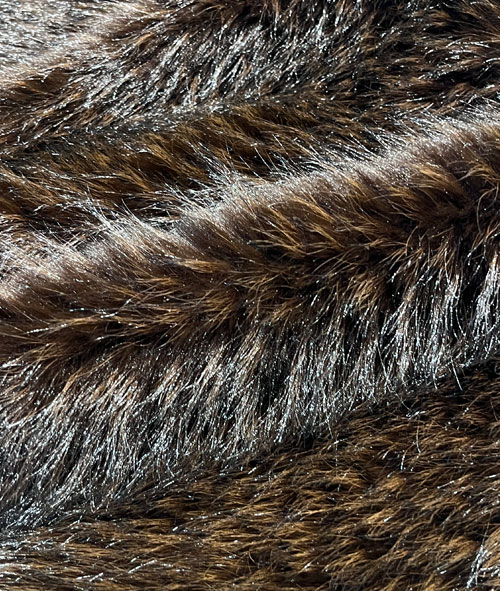
Mink Plush Fabric is a high-grade simulated fur plush fabric made of ultra-fine superfine polyester fibers through layered fluffing and three-dimensional shaping technology. Different from the flat single-layer structure of PV Plush Fabric, Mink Plush Fabric adopts a multi-layer fluffy structure with longer, looser, and naturally layered piles. The fiber fineness of Mink Plush Fabric is far higher than that of PV Plush Fabric, making each pile finer and more flexible. The pile arrangement of Mink Plush Fabric is natural and irregular, simulating the growth state of real mink fur, forming a strong three-dimensional fluffy effect that PV Plush Fabric cannot achieve. The structural design of Mink Plush Fabric focuses on tactile simulation and visual luxury rather than extreme wear resistance.
In short, Mink Plush Fabric and PV Plush Fabric adopt completely different weaving and shaping structures. Mink Plush Fabric is a three-dimensional layered long-pile decorative fabric, while PV Plush Fabric is a flat compact short-pile practical fabric. This core structural difference determines that Mink Plush Fabric is not the same as PV Plush Fabric in essence.
Tactile Softness & Surface Texture Comparison
Softness and tactile experience are the most intuitive differences between Mink Plush Fabric and PV Plush Fabric, and also the main criteria for users to distinguish Mink Plush Fabric and PV Plush Fabric. Although both Mink Plush Fabric and PV Plush Fabric are soft plush materials, their touch feelings are completely different.
PV Plush Fabric delivers moderate, stable, and neat softness. The short dense piles of PV Plush Fabric make the surface smooth and flat with uniform softness in all areas. The touch of PV Plush Fabric is solid and delicate without excessive fluffy floating feeling, bringing a down-to-earth and comfortable contact experience. The softness of PV Plush Fabric is balanced and restrained, suitable for long-term skin contact and frequent touching. After long-term use, the softness of PV Plush Fabric remains stable without obvious attenuation, and the surface texture of PV Plush Fabric is always neat and orderly.
Mink Plush Fabric provides ultra-soft, silky, and cloud-like fluffy touch that is far superior to PV Plush Fabric. The ultra-fine layered fibers of Mink Plush Fabric make the fabric surface extremely soft and lightweight, with a natural floating fluffy feeling. When touching Mink Plush Fabric, users can feel obvious fiber layering and flexible rebound, while PV Plush Fabric presents a flat and compact touch. The softness of Mink Plush Fabric is more delicate and luxurious, bringing a high-grade skin-friendly experience, but the fluffy texture of Mink Plush Fabric is easier to be affected by external extrusion compared with stable PV Plush Fabric.
In terms of surface smoothness, PV Plush Fabric has higher flatness and uniformity, while Mink Plush Fabric has richer three-dimensional texture and layering. Users who pursue neat and durable daily texture prefer PV Plush Fabric, while those who pursue extreme softness and fluffy sense choose Mink Plush Fabric.
Visual Appearance & Luster Differences
The visual presentation of Mink Plush Fabric and PV Plush Fabric also has obvious differences, which directly affect the decorative style and applicable scenarios of Mink Plush Fabric and PV Plush Fabric. Distinguishing the appearance features of Mink Plush Fabric and PV Plush Fabric helps users quickly identify the two fabrics in procurement and design.
PV Plush Fabric has a neat matte appearance with uniform color and stable luster. The short and regular piles of PV Plush Fabric reflect light evenly, presenting a simple, clean, and versatile visual effect. The surface of PV Plush Fabric has no obvious light and shadow layering changes, and the overall style is casual, modern, and practical. PV Plush Fabric supports bright and saturated color dyeing, with pure color tone and strong color reduction, suitable for daily casual home decoration and cartoon-style plush products.
Mink Plush Fabric has a natural low-gloss luxury appearance with rich light and shadow layers. The layered long piles of Mink Plush Fabric produce subtle light reflection changes from different angles, forming a dynamic and high-grade visual effect. The luster of Mink Plush Fabric is soft and gentle, avoiding the flat matte feeling of PV Plush Fabric, and the overall texture is more luxurious and warm. Mink Plush Fabric is more suitable for elegant, warm, and high-end decorative styles, which can significantly improve the ornamental grade of finished products compared with PV Plush Fabric.
Durability, Wear Resistance & Resilience Performance
Durability is the core practical difference between Mink Plush Fabric and PV Plush Fabric, and also the key factor affecting product service life. There is a clear gap between Mink Plush Fabric and PV Plush Fabric in wear resistance, compression resistance, and pile stability.
PV Plush Fabric has outstanding durability and wear resistance. The compact short-pile structure and tight base fabric of PV Plush Fabric enable it to resist frequent daily friction, stretching, and washing. PV Plush Fabric is not easy to shed hair, deform, or wrinkle after long-term high-frequency use. The pile fixation technology of PV Plush Fabric is mature and stable, ensuring that the piles will not fall off or loosen easily. In terms of compression resilience, PV Plush Fabric can quickly rebound after extrusion, permanently maintaining a neat flat state. These advantages make PV Plush Fabric extremely suitable for high-frequency use scenarios.
Mink Plush Fabric has relatively weaker wear resistance and compression stability. Although Mink Plush Fabric has excellent fluffy resilience, the long layered piles of Mink Plush Fabric are easy to be flattened under long-term heavy extrusion or continuous friction. Compared with PV Plush Fabric, Mink Plush Fabric has a slightly higher floating hair rate in the initial use stage, and frequent violent cleaning will cause pile disorder and layering damage. Mink Plush Fabric cannot withstand long-term high-frequency friction like PV Plush Fabric, so it is not suitable for ultra-practical daily products that require high durability.
Warmth, Air Permeability & Seasonal Adaptability
Warmth retention and comfort performance are important indicators to distinguish Mink Plush Fabric and PV Plush Fabric, determining their seasonal application scope in home textiles and warm products.
Mink Plush Fabric has superior warmth retention thanks to its thick layered fluffy structure. The multi-layer piles of Mink Plush Fabric can lock more static air, forming a stable warm air layer on the fabric surface. The warmth performance of Mink Plush Fabric is significantly better than that of PV Plush Fabric, making Mink Plush Fabric the best choice for cold winter warm products. Meanwhile, the fiber gap of Mink Plush Fabric ensures basic air permeability, avoiding stuffiness while keeping warm.
PV Plush Fabric has moderate and balanced warmth performance, suitable for four-season daily use. The short-pile structure of PV Plush Fabric provides basic warmth for spring and autumn, and will not be too thick and stuffy in mild weather. The air permeability of PV Plush Fabric is more stable than that of Mink Plush Fabric, with stronger all-season adaptability. PV Plush Fabric focuses on balanced comfort, while Mink Plush Fabric focuses on extreme warm protection.
Application Scenario Differences: Mink Plush Fabric vs PV Plush Fabric
Due to the above performance differences, Mink Plush Fabric and PV Plush Fabric have completely different core application scenarios, and cannot replace each other in actual production.
PV Plush Fabric Application Scenarios: Positioned as a practical universal fabric, PV Plush Fabric is widely used in daily high-frequency use products. PV Plush Fabric is the first choice for mass plush toys, children’s daily dolls, household sofa cushions, ordinary throw pillows, pet textile products, and washable daily home textiles. The wear-resistant, non-deformable, and easy-to-clean advantages of PV Plush Fabric perfectly meet the needs of long-term repeated use and frequent cleaning, making PV Plush Fabric the most cost-effective material for civilian mass production.
Mink Plush Fabric Application Scenarios: Positioned as a high-end decorative warm fabric, Mink Plush Fabric is mainly used for high-comfort and high-ornamental products. Mink Plush Fabric is widely used in winter thick blankets, high-end customized plush gifts, luxury home soft decoration, close-fitting warm bedding, and high-grade craft decorative products. Mink Plush Fabric focuses on improving product comfort and decorative grade, and is not suitable for high-frequency friction scenarios that require high durability.
Maintenance & Cleaning Difficulty Comparison
The maintenance difficulty of Mink Plush Fabric and PV Plush Fabric is also different, which is an important reference for household use and after-sales maintenance.
PV Plush Fabric has ultra-low maintenance difficulty. PV Plush Fabric supports machine washing and repeated cleaning, with strong stain resistance and fast drying speed. The short neat piles of PV Plush Fabric are not easy to hide dust, and daily dust removal only requires simple wiping. PV Plush Fabric will not deform or shed hair after cleaning, and can automatically rebound to restore neat texture, suitable for lazy daily maintenance and mass product after-sales processing.
Mink Plush Fabric requires refined daily maintenance. Mink Plush Fabric is not suitable for frequent machine washing, and it is recommended to clean Mink Plush Fabric by hand with mild detergent. Users need to comb the piles of Mink Plush Fabric regularly to maintain layered fluffiness, and avoid long-term extrusion to prevent pile flattening. The maintenance threshold of Mink Plush Fabric is higher than that of PV Plush Fabric, requiring more careful daily care.
Cost & Cost Performance Differences
In terms of production cost and market pricing, Mink Plush Fabric and PV Plush Fabric also have obvious gaps. PV Plush Fabric has mature production technology, simple processing procedures, and low raw material loss, so PV Plush Fabric has low unit price and high cost performance, very suitable for large-batch mass production. Mink Plush Fabric adopts ultra-fine fiber raw materials and complex layered fluffing technology, with higher production cost and higher market positioning, so Mink Plush Fabric is more suitable for small-batch high-end customized products rather than low-budget mass production.
Conclusion
After comprehensive comparison, the answer is clear: Mink Plush Fabric is not the same as PV Plush Fabric. Mink Plush Fabric and PV Plush Fabric are two distinct plush textiles with different structures, textures, performance advantages, and application values. Mink Plush Fabric features ultra-soft layered fluff, superior warmth, and high-end decorative texture, focusing on comfort and ornamental value. PV Plush Fabric features neat short piles, excellent wear resistance, stable durability, and high cost performance, focusing on practicability and universal usability.
Understanding the essential differences between Mink Plush Fabric and PV Plush Fabric helps textile buyers and creators avoid material selection mistakes, accurately match Mink Plush Fabric and PV Plush Fabric with suitable sewing and production projects, and maximize the use value of each fabric. Whether choosing Mink Plush Fabric for high-end warm decoration or PV Plush Fabric for daily durable products, targeted material matching can effectively improve finished product quality and user experience.

 Pусский
 日本語
日本語 한국어
한국어 العربية



 WhatsApp
 Phone
Phone
Comment
(0)